Wednesday, October 23, 2013

PAPER CHASE: THE FBI’S GREENBRIER BUNKER NOTIFICATION DUTY

Congressional Rubble

“All FBI offices, day-to-day and emergency, should be supplied in advance and on a secret basis, with the location of the Congressional relocation site and with instructions that in the event of a Presidential proclamation calling upon the Congress to convene at the Congressional relocation site, the FBI should inform members of Congress so presenting themselves and so establishing their identity, of the location of the Congressional relocation site.”

- Text from a February 10, 1961 FBI memo recommending the protocol for notifying members of the United States Congress of their emergency relocation site

1961 FBI Text

Thanks to investigative journalist Ted Gup we all know that the super bunker at the Greenbrier resort in White Sulphur Springs, West Virginia was intended for use by the Congress in the event of a nuclear attack on the United States. He revealed its unlikely existence on May 31, 1992 in a Washington Post magazine cover story. Not included in Mr. Gup’s very detailed exposé is the procedure by which rank and file members of Congress would have been made aware of the bunker. This post will fill in that small gap in the Greenbrier bunker knowledge base.

Greenbrier-False-Front Door 
Earlier in the year we published a post about government correspondence concerning the sensitive task of notifying members of Congress of their top secret relocation site in the event of a national emergency during the Cold War.[1] The author of the document that we presented in our previous story suggested several options to his addressee on how to handle this apocalyptic chore. One possibility included saddling the Federal Bureau of Investigation with the notification duty. The reasoning behind this particular choice was the concern that the security of the site might eventually be compromised if an ever increasing number of active and former Congressmen had ongoing knowledge of its location. Obviously, nothing was ruled in or ruled out in this one-sided memo, so we (and our readers) were left hanging awaiting another memo that revealed the decision. By virtue of the tireless FOIA filing efforts of GovernmentAttic.org we now have the additional documents that prove that the Greenbrier bunker notification responsibility was, in fact, assigned to the FBI. And, surprisingly, it was not a job that was immediately accepted with open arms by the Bureau.

Observation copy

Indeed, in assessing the White House’s request for this assistance, senior FBI agent Alan H. Belmont argued against it. In an October 21, 1957 internal memo Belmont was more concerned with the bureau’s mission of “rounding up enemy aliens” during a crisis – not helping panicky legislators learn about their shelter accommodations. Belmont also raised the possibility of “some member of Congress” coming to a FBI field office to demand the location of the bunker site prior to the approved disclosure period (i.e. after a Presidential proclamation). He concluded that this scenario would put the “Bureau in a bad light” and imply “that the White House does not sufficiently trust the rank and file of the Congress” with the information.

Hoover and Tolson - 1947

But FBI leadership quickly disregarded these concerns in the form of terse mark-ups to Belmont’s correspondence. Associate Director Clyde Tolson weighed in first by scribbling “If the President wants us to do this, I think it is OK – T.” Director J. Edgar Hoover concurred and wrote the following next to Tolson’s note: “Of course. We must do it if that is the President’s desire. H.”

Tolson-Hoover_Handwritten Note copy

That settled that. And then there was a period of silence while the Greenbrier bunker was actually built. In early 1961, as the bunker was nearing operational status, the issue of congressional notification was revisited in more concrete terms.

Following some bureaucratic revisions, a protocol for the secret notification duty was arrived at between the FBI and the Office of Civil and Defense Mobilization (OCDM). According to an internal FBI memo, the Attorney General was officially notified of the agency’s new responsibility via a letter dated February 14, 1961.

In a March 7, 1961 memo Director Hoover stated that FBI field offices “have been advised of the Bureau’s responsibility in informing Members of Congress, upon their request, as to the specific location of the Congressional relocation site. This information will only be made available to Congressmen in the event of an emergency, when, in the judgment of the President, Congress should convene outside Washington, D.C. The identity of the Congressional relocation site is being maintained by our field offices in sealed envelopes, to be opened only upon the issuance of the Presidential proclamation.”

Hoover 1961 Statement

Hoover’s memo to the field offices—distributed through the Albany, New York office—provided additional details regarding the procedure:

“Attached hereto, for each office, is an appropriate number of sealed envelopes, classified Secret, each containing the identity of the specific location of the Congressional relocation site. In accordance with Congressional instructions received through OCDM, these envelopes should not be opened, except in the event the condition cited previously exists. A sealed envelope should be filed in each copy of your office defense plan as Appendix 25…”

Hoover_Distribution copy

One last bit of business that needed to be addressed was where exactly to store the defense plan containing the location of the Congressional relocation site at the Records Branch of the FBI in Washington, DC. In a memo dated March 14, 1961, Mr. Belmont helpfully suggested that “Bureau File 66-17388” be retained in the Confidential File Room. In 1964 the matter was revisited in the form of a memo requesting confirmation that the file still needed to reside in what was now called the “Special File Room.” Per the initials of the responsible supervisors, the secret location of the Greenbrier bunker stayed put in its super secure haven.[2]

File Room copy

But where were the field offices maintaining their copies of the defense plans and sealed envelopes (aka Appendix 25) and were they secure? Sixteen years after the first envelope was licked, someone finally asked. According to a March 8, 1977 memo, representatives of the Defense Preparedness Agency (a successor agency to OCDM) “wanted reassurance that these sealed envelopes are kept in a safe place and had not been tampered with in any way…” This same memo contained FBI Director Clarence M. Kelley’s request to “All SACS” that each of them confirm “the safe location and integrity of sealed envelopes” and notify FBI headquarters of the results of their inspection by close of business on March 11, 1977.

Scotch Tape copy

Miraculously, most of the field offices had nothing but good news to report back to the Director. A sampling of these routine replies can be viewed here. There was one case in Chicago where one of the sealed envelopes had been “worn on one end and had been sealed with Scotch tape, dated and initialed.” There were a few other anomalies with regard to the envelopes in other offices, but these issues were reported and did not set off any alarm bells. And then there was the case of the Butte, Montana field office.

Butte Postcard_Lo

The Butte office, reputedly a dumping ground for the worst FBI agents in the Bureau,[3] responded to headquarters in a memo that stated that the “envelope must have been inadvertently destroyed when all secret material [was] ground up” when they updated their plans the previous year. They then meekly requested a replacement envelope. The Director was having none of it. He fired back a memo rebutting their shredder excuse and demanded that an “exhaustive search” be conducted with a subsequent report of their efforts. Unfortunately, there is no follow-up memo included in the declassified documents.

Butte_Reprimand copy

Presumably the Butte office received their replacement envelope (and a reprimand) and maintained its integrity until the office was permanently closed in 1989.

There is no evidence contained in the declassified documents released thus far that the FBI was relieved of its notification responsibilities prior to Ted Gup’s published revelation of the existence of the Greenbrier bunker in 1992. It is therefore assumed that the procedure remained in place for the life of the bunker.

Have the field offices been assigned a similar notification task in the years since the decommissioning of the Greenbrier bunker? If there is a new Congressional relocation site, the answer to this question may be yes. After all, the level of trust between the White House and Congress has only declined since 1961.

J Edgar Hoover

REFERENCES

Unless otherwise noted, all of the documents referenced in this post have been excerpted from the following FOIA release:

"Federal Bureau of Investigation (FBI) war/emergency plans and Bureau assistance for members of Congress in the event of war/emergency, 1955-1977"

Source: Federal Bureau of Investigation
Attn: FOI/PA Request
Record/Information Dissemination Section
170 Marcel Drive
Winchester, VA 22602-4843

To read all of the memos referenced in this post, please see our FBI Congressional Relocation Site Correspondence collection on Scribd.


[1] The redacted government documents referenced in this post do not mention the Greenbrier resort bunker in White Sulphur Springs, West Virginia as the relocation site for the U.S. Congress, but another declassified FBI document we have posted does. See: http://www.scribd.com/doc/102562220/Greenbrier-FBI-Memos-1957.

[2] CONELRAD has filed a Freedom of Information request with the FBI for Bureau File 66-17388 including Appendix 25 with a special note that we would like the contents of the sealed envelope photocopied. We will update this post if and when we receive this documentation.

[3] For a mention of the Butte field office’s bad reputation see page 28 of “From Appalachia to the White House: My Life in the Secret Service” by Joe Dye [Bloomington, IN: CrossBooks, 2011]. See also pages 67, 216 and 396 of “The FBI” by Ronald Kessler [New York: Simon and Schuster, 1994] in which he references the history of the notorious field office.

Monday, August 19, 2013

ATOMIC GODDESS REVISITED: RITA HAYWORTH’S BOMB IMAGE FOUND!

Gilda Headline copy

CONELRAD EXCLUSIVE

Several years ago CONELRAD posted an article detailing our exhaustive investigation into the claims that movie star Rita Hayworth’s image adorned the fourth atomic bomb ever detonated: The Able device exploded at Bikini Atoll on July 1, 1946. The article was the result of many months of research that included correspondence with archivists from the National Archives and the Los Alamos National Laboratory as well as interviews with some of the men who participated in the Operation Crossroads Able test. We concluded that Ms. Hayworth’s likeness was not on the Able bomb, but that a stencil of her then current hit film, Gilda, was. We based this finding on the majority of the interviews that we conducted and, more significantly, on the archival government film footage of the bomb itself.

Of the six Crossroads participants that we interviewed only Leon D. Smith, the weaponeer onboard Dave’s Dream, the plane that dropped the Able bomb, insisted that he saw Rita Hayworth’s image on the weapon. Smith was quite specific in his recollection. He told us the following about the image during our interview with him:

“I thought it was something very revealing. I remember it being more of an evening gown… if I look at the nose from the rear of the bomb, I thought it was in the upper left-hand quadrant – up in the front of the bomb.”

The then 88-year-old retired electrical engineer added that one of the reasons he remembered the image so clearly was because “[Hayworth] was very popular with us [servicemen and scientific support personnel] because we had been overseas and sort of starved for sex. And we had pictures of Rita overseas, so I was just delighted to see her picture on the bomb.”

But in evaluating all of the evidence that we had uncovered and taking into account the reliability of human memory after so many decades, we decided to side with the majority recollection of our interviewees as supported by the only released footage of the bomb. In the end, despite our best efforts, we could not find the hard proof needed to validate Leon D. Smith’s colorful and vivid memories.

As it turns out, though, Mr. Smith was right all along and we could not be happier.

Indeed, we are delighted to be able to announce that the evidence that we failed to locate in 2008-2009 magically appeared in our e-mail inbox earlier this month. The following images—published for the first time by CONELRAD—are stills captured from a film roll that came from the Los Alamos National Laboratory and they are presented here with permission.

Gilda01

Gilda_02

Atomic documentarian Peter Kuran, the guardian angel who thought of CONELRAD when he discovered the historic film, told us that the footage “came out of a can without classification.” Kuran later added that the quick shots of Hayworth’s image on the Able bomb appear at the beginning of a roll of film that, for whatever reason, was not released to filmmaker Robert Stone when he attempted to get all Crossroads bomb footage declassified for his 1988 documentary Radio Bikini.[1]

Los Alamos’s historian, Alan B. Carr, told CONELRAD that he had never seen the Hayworth images before Peter Kuran showed them to him and that the film roll in question is considered “unclassified.” Carr is not sure when the film was declassified or if it ever was considered classified. Kuran hopes to use the footage for an upcoming video project. CONELRAD will notify its readers when it is released. In the meantime, readers can view Kuran’s impressive archival handiwork on his YouTube channel.

SOLVING THE FINAL MYSTERY

The final mystery then is where did this particular Rita Hayworth image come from?

When CONELRAD was researching its original “Atomic Goddess” article we found varying press accounts as to how Hayworth’s image was presented on the Able device. One article improbably claimed that it was a carefully rendered portrait painted by three artists. Operation Crossroads official Thomas Lanahan told United Press in 1946 that the image was an advertisement for Gilda that was cut out of an Esquire magazine. However, sixty-three years later he was certain that only a stencil of the name “GILDA” was marked on the weapon. Leon D. Smith told us that he remembered it being a painting.

Now that we were able to actually see the Hayworth image as it appeared on the bomb, we decided to revisit Lanahan’s original version of events as told to the wire service.[2] His comments, via UP, were published in the June 30, 1946 edition of the Philadelphia Inquirer:

“We stenciled the name in two-inch black letters. Then somebody suggested we needed a picture, so we found an old copy of Esquire and cut out a movie advertisement for Gilda.”

Lanahan_UP_1946

CONELRAD had already examined Esquire on microfilm for the period in question for our earlier article, so we instead tried to find the image on the Internet. No luck. We also checked with a few prominent commercial photograph archives.[3] These companies had dozens of Gilda-era Hayworth shots, but not the one that appears on the bomb.

We then consulted with Adrienne L. McLean, the author of Being Rita Hayworth: Labor, Identity, and Hollywood Stardom, and she was able to produce from her personal collection a very similar image to what is on the bomb. Specifically, McLean provided us with a photo of a sheet music book for a Mel Tormé song from 1946 that featured Hayworth on the cover.

Hayworth sheet music_Lo

But it wasn’t quite the same art that graced the bomb. It may have been a shot taken seconds before or seconds after the image that is on the bomb. So we decided to take one last careful look at Esquire on microfilm at the Library of Congress. We requested microfilm of the magazine from June 1945 through October of 1946 to cover all bases.

As we were nearing the end of our meticulous scrolling, the elusive photograph appeared on page 78 of the June 1946 edition! The pin-up, credited to legendary Hollywood photographer Bob Coburn (1900-1990), was a dead ringer for the image on the bomb, but we still wanted to see the original shot as it appeared in the actual magazine. It was immediately obvious that the dark microfilm scan that we took did not do justice to Mr. Coburn’s camera magic. So we ordered a copy of the original issue on eBay.

Esquire Pgs 78-79

The 10” x 13” magazine (Esquire has shrunk considerably since the 1940s) arrived in the mail a few days later. The full color Hayworth portrait, titled “American Beauty,” pops off the page. The dress that she is wearing is an earlier version of the Jean Louis-designed Put the Blame on Mame evening gown seen in Gilda. The text at the bottom of the page gives a brief biography of the actress, plugs for her current films and her measurements.

Esquire_pg 78 copy

We consulted with artist David K. Landis of Shake It Loose Graphics for his professional analysis of whether the Esquire shot is the same image that was cut out and affixed to the bomb. Landis told us that he believes that it is. Some readers may be wondering why the white necklace from the Esquire photo is not visible in the bomb images. As Mr. Landis pointed out to us, it is visible, but just barely. It is possible that the lights used with the motion picture camera that filmed the bomb were responsible for washing out the finer definition of the necklace. One also has to consider how far away from the weapon the camera may have been.

Necklace

From examining earlier images of the bomb (when the “GILDA” stenciling was still being touched up and before the Hayworth photo was added), Landis was also able to explain the hard-edged white surface that appears in the later shots of the bomb with the Hayworth image. He told us that this was the result of someone covering that area of the bomb with a sheet of paper to protect it from the black sealant spray that was applied at some point after the shot of the man working on the stencil painting of “GILDA.”

Gilda Bomb Collage

A MEMORABLE SHOT

When we called Thomas Lanahan, the man who still has the original “GILDA” stencil, to tell him the good news about finally finding the evidence to support the complete Rita Hayworth atomic bomb story, he told us that he still remembers the Esquire shot. It is a testament to the beauty and star power of Rita Hayworth that a 92-year-old man remembers a pin-up photo from 1946. Of course, the unusual backdrop Lanahan and his buddies chose for the picture is pretty memorable, too.

Lanahan_2009

We’ll close this post by revisiting the June 30, 1946 Orson Welles ABC radio broadcast in which the famous film auteur commented on his wife’s imminent role in the Operation Crossroads atomic test. The recording is made all the more extraordinary now that we know for a fact that the image was on the bomb.

ACKNOWLEDGEMENTS

This post is dedicated to Dave’s Dream weaponeer Leon D. Smith whose memory served him so well when we asked him about Rita Hayworth’s image being on the atomic bomb four years ago. Unfortunately, he passed away at the age of 92 on October 14, 2012 and was denied the right to tell us he “told us so.” For the record: he told us so.

Thanks again to Peter Kuran for thinking of us when he made his amazing discovery. And thanks to Los Alamos National Laboratory historian Alan B. Carr for granting CONELRAD permission to publish the Rita Hayworth atomic bomb images.

Thanks to Adrienne L. McLean for her Hayworth-centric photographic memory and her general guidance on the movie icon.

Finally, thanks to Wellesnet for their online preservation of the remarkable 1946 Orson Welles Bikini radio commentary.

Esquire Cover


[1] Historian Alan B. Carr, who was not yet working for the Los Alamos National Laboratory when Robert Stone submitted his Freedom of Information Act requests for Operation Crossroads footage, suggested in an August 14, 2013 email to CONELRAD that there are a couple of theories for the why the filmmaker never received the footage with the Rita Hayworth image. One theory is that some of the films Stone requested may not have been under the purview of the Los Alamos archives in the mid-1980s. These films may have been under the control of the testing division and it is possible that Stone’s request did not filter down to this department. Another theory is that the film itself was overlooked. The field testing motion picture collection, according to Carr, contains thousands of films and that there is no “user-friendly database.” For the last couple of years Carr has been leading an effort to organize and preserve these historic films.

[2] It is important to note that in all of the voluminous press clippings we examined on this topic, Thomas Lanahan is the only person quoted by name about the Gilda stencil and the Hayworth image on the Able atomic bomb. For a complete list of newspaper and magazine citations, see our original article.

[3] CONELRAD also checked with the Margaret Herrick Library in Beverly Hills for the Rita Hayworth image. Their initial search did not locate the photo we were seeking.

Monday, April 29, 2013

TICKET TO MOUNT WEATHER: BUNKER PASS FORM

00

While searching for documents relating to our recent post on the Supreme Court’s Cold War relocation arrangement with a resort hotel in Asheville, North Carolina, we came across something else of interest. A few months after the Cuban missile crisis of October 1962, the Court received “Pass Information” forms from the Office of Emergency Planning (OEP).[1] The “questionnaires”—as a member of Chief Justice Earl Warren’s administrative staff called them—are a bit intrusive. Indeed, one line requests the submitter’s blood type (“If known. Otherwise leave blank”). Another line requests the submitter’s weight. There is also a request for “three (3) pictures” that “should be of such a size that a picture 2 1/16” x 2 x 1/16” can be trimmed to fit the passes.”

Supreme Court Emergency Pass Form by Bill Geerhart

What was this mysterious pass for exactly? The dead giveaway is at the bottom of the document. The text instructs the submitter to return their “Pass Information” form to William E. Elliott, Security and Inspection Officer, Office of Emergency Planning. Mr. Elliott, as CONELRAD blog readers may recall, is the same person referenced in our recent Mount Weather Morals Case Mystery post. Specifically, he was one of the men consulted in the rushed handling of a “morals case” that threatened to compromise two top secret federal emergency relocation sites. We have another document that references this individual as being a senior official with security operations at the “Classified Location” (aka Mount Weather, aka High Point, aka the Special Facility). Not much else is known about the shadowy Mr. Elliott other than that he shows up in a 1958 Official Register of the United States entry as a “Security and Inspections Officer” with an annual salary of $12,150. If William E. Elliott or any members of his family are reading this post, we’d love to hear from you.

It is unclear from the handling of this document that the Chief Justice knew what its intended purpose was. The note asking for Warren’s guidance on issuing the form does not indicate whether there was any additional instruction offered by the OEP.

Supreme Ct 1963 
In the end, the memorandum cover page to the “Pass Information” form that was prepared for distribution to the Associate Justices simply states that “The Office of Emergency Planning is asking us to complete the attached form for official purposes.” It is signed off by the initials “E.W.” common to Earl Warren’s memos.[2] CONELRAD was unable to find any evidence that the forms were ever completed by the Justices.[3] Based on the Chief Justice’s declining interest in civil defense, it seems clear that he never disclosed his weight or blood type to Mr. Elliott.

Earl-Warren-1954


[1] The document was found in Box 359, Papers of Earl Warren
Folder: Sundry Memos to the Court, 1961-1964
Library of Congress, Manuscript Division

[2] During the course of our research at the Library of Congress, CONELRAD examined dozens of Warren’s memos.

[3] CONELRAD reviewed all of the administrative records for this period of the Supreme Court’s history. We have also reviewed all of the unclassified records of the Office of Emergency Planning at the National Archives in College Park, Maryland. There are a significant number of documents from this agency that remain classified.

Wednesday, April 24, 2013

A RESORT OF THEIR OWN: The Supreme Court’s Cold War Relocation Plan

Oak Grove Park_Aerial copy

In 1992 the Washington Post revealed to the world the surprising Cold War emergency relocation plan of the United States Congress. In remarkably detailed reporting the newspaper told the Strangelovian story of a massive government bunker built beneath the posh Greenbrier resort in White Sulphur Springs, West Virginia in the late 1950s.[1] The irony of lawmakers riding out World War III under a five star hotel while the public sheltered in place was hard to miss. Needless to say, CONELRAD was intrigued to find, years later, a reference to the U.S. Supreme Court’s oddly similar contingency plan in David Krugler’s impressively researched 2006 book This Is Only a Test: How Washington D.C. Prepared for Nuclear War.[2] Indeed, based on previously published news articles we had assumed that in the event of an emergency the Justices would have been whisked away to Mount Weather, the impregnable crown jewel of the Federal Relocation Arc.[3] But Krugler had discovered evidence proving that the Court had secured nicer—if significantly less fortified—accommodations at the historic Grove Park Inn in Asheville, North Carolina. When we contacted the author to see if he had a copy of the April 1956 agreement between the Supreme Court and the hotel, he told us that he had not come across that crucial document – only memoranda that referred to it. That was all we needed to hear. The search was on.

Warren Ct_1956-1957

CONELRAD’s next call was to the Grove Park Inn to ask the management if they possessed the elusive contract. The representative we spoke with was uncertain as to whereabouts of the document but he helpfully referred us to Bruce E. Johnson who has written extensively about the resort. “If anyone would know about it,” the representative said, “Bruce would.”[4] Mr. Johnson informed CONELRAD that he had, in fact, seen the contract along with some additional government correspondence while going through the hotel’s archives to research his book Tales of the Grove Park Inn (the author devotes two paragraphs to the extraordinary government arrangement on page 313).[5] Unfortunately, Johnson did not have a copy of the contract – only his notes. Before contacting the hotel again, we decided to engage in a broader search of the Supreme Court records held at the Library of Congress where Professor Krugler had originally found the memos referencing the agreement. We also examined federal civil defense records at the National Archives in College Park, Maryland. And, while we were unable to locate the contract itself at these facilities, we did uncover other important documents that inform this article. We were now ready to travel to North Carolina.

On March 29th we were permitted access to the Grove Park Inn’s archives. Johnson had warned us prior to the visit that the records—which are kept in a large filing cabinet in the hotel’s back office—were not well organized.[6] But, as it turned out, CONELRAD’s Bill Geerhart was able to find the contract quickly – it was in a blue binder labeled “Historic Memorabilia 1955-1969.”

Blue Binder_Lo

The weathered photocopy of the April 3, 1956 contract (more specifically a “Letter of Understanding”) is attached to a cover letter that was sent from the corporate office to the Grove Park Inn so that the document could be “kept on the property in the event there is none there right now.”[7] It is fortunate for history that this step was taken because government copies of the contract have since been either destroyed or classified.[8]

Contract Excerpt

This remarkable document, published here for the first time, is short and sweet. The two page letter provides that “In the event of an enemy attack or the imminence thereof,” the Supreme Court would “take possession of the facilities described in Exhibit ‘A.’ Along with other particulars, the attached exhibit describes the hotel as having 141 rooms, 4 cottages and a 40 room dormitory. The author of the agreement also—perhaps a bit too optimistically considering the effects of atomic war—includes a provision for a “formal lease” to be negotiated “as soon as possible, thereafter.”[9] Reflecting the open-ended nature of the Cold War in 1956, there is no specified expiration date in the contract. This is an omission that would cause headaches later.

Supreme Court / Grove Park Inn Contract - 04/03/1956 by Bill Geerhart

OFFICE OF THE CLERK
Supreme Court of the United States,
Washington 13, D.C.

April 3, 1956

Grove Park Inn,
Asheville, North Carolina

Gentlemen:

Reference is made to the confidential discussions heretofore had between our respective representatives. In pursuance thereof, the United States of America, acting by and through The Supreme Court of the United States, represented by the undersigned as contracting officer, hereby proposes to acquire the right to use and occupy the facilities described in the enclosure hereto, marked Exhibit “A”, as hereinafter provided.

In the event of an enemy attack or the imminence thereof and upon notice verbal or written to such effect, by an authorized representative of the Government, it is understood and agreed that you will permit The Supreme Court of the United States immediately to take possession of the facilities described in Exhibit “A”. As soon as possible thereafter, the Government will enter into negotiation with you for the execution of a formal lease covering the rights and obligations of the parties with respect to the aforementioned facilities and providing fair compensation for the use thereof the Government commencing with its initial occupancy. Such formal lease or other instrument will be negotiated by General Services Administration. All prior conversations or negotiations between our representatives are merged in and superseded by this letter.

It is understood and agreed that the Government will not be responsible for any expenses incurred by you prior to the period covered by the formal lease or other instrument to be hereafter negotiated.

It is further understood and agreed that from time to time due to changed conditions, it will be necessary to amend or supplement Exhibit “A” by the addition or deletion of facilities therefrom.

Please indicate the acceptance by your governing body of the foregoing by signing and returning to us the original and two copies of this letter. A copy is attached for your files.

Sincerely yours,

Harold B. Willey, Clerk
Contracting Officer

Accepted, as of the date of this letter.

Hotel Operating Co

By EC Leach
Attorney in Fact

Leach

The man who signed the agreement on behalf of the Grove Park Inn (or more technically, the Hotel Operating Company) was Edward C. Leach, Sr., the president of the Texas-based Jack Tar Hotel chain that owned the Grove Park Inn at the time. Leach died in 1996 at the age of 83. His son, Edward C. Leach, Jr., a Charlotte, North Carolina attorney, told CONELRAD that his father never mentioned the top secret arrangement with the Supreme Court and that prior to our phone call he had never known about it.[10]

Why was the luxurious, but bunker-less Grove Park Inn chosen to host the Supreme Court Justices and their staff during a crisis? One of the aforementioned document discoveries by CONELRAD answers this critical question. The year before the contract was formally agreed to, Harold B. Willey, the Clerk of the Supreme Court—and the man who signed the contract on behalf of the government—visited Asheville, North Carolina on a scouting mission.
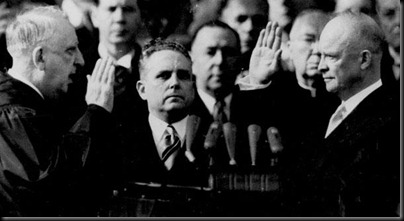
Harold B. Willey - Center - 1953

Shortly after his return to Washington, D.C. in October of 1955, Willey summarized his findings for the Chief Justice of the Supreme Court, Earl Warren. The letter, which is published below for the first time, includes the explanation that General Paul of the Office of Defense Mobilization (ODM) suggested Asheville as a “likely site for us.”[11] CONELRAD has identified the referenced official to be Lieutenant General (Retired) Willard S. Paul. Paul had been recruited to the ODM in 1954 by the director of the agency, Arthur S. Flemming.[12]

General Willard Paul_lo res

The clerk uses the next couple of paragraphs of his letter to lay out the finer points of Asheville and its desirability as a relocation site. He explains that the town is “served by Capital Airlines and the Southern Railway” and goes on to reason that “Because all large cities are considered to be enemy targets, a hotel in a secluded small city wherein approximately one-hundred people could both live and work, with spaces available for a court room and clerical offices, seems a most appropriate facility for the court.” Willey then cites his rationale for recommending the Grove Park Inn over the other major hotels in Asheville (the Battery Park and the George Vanderbilt). His reasons run the gamut from the practical—the hotel has large conference rooms that can be converted into courtrooms and libraries—to the frivolous: the hotel has plans to build a swimming pool and there is a golf course that adjoins the property.[13]

Grove Park Inn Selected as Relocation Site: 1955 by Bill Geerhart

In the end, Willey went beyond merely recommending the Grove Park Inn to the Chief Justice. Indeed, he obtained a letter from the manager indicating that the owners of the hotel were “receptive to the idea” of the Court relocating there and he attached a draft “Letter of Understanding” to the letter that he submitted to Warren [Editor’s note: the attachments were not found by CONELRAD].[14] But the always prudent Chief Justice turned to a colleague on the bench for an in-house legal review of the matter before moving forward. On a note card, Justice Harold Hitz Burton succinctly stated:

Dear Chief –

I have examined the attached material and believe it presents a reasonable solution on its face.

HHB[15]

Burton Approval copy

The following year, on June 6, 1956, Willey—who was retiring as clerk—notified Warren that the “letter of understanding” with the Grove Park Inn had been signed and that a copy had been distributed to General Paul, the civil defense official who had set everything in motion in the first place.[16] The Chief Justice was “pleased” with the progress and asked Willey to discuss with the incoming clerk, John T. Fey, plans “for actually establishing the Court at Asheville should the need to do so confront us.”[17] Very little was ever done in this regard. According to an undated draft letter by Supreme Court Clerk John F. Davis to Edward A. McDermott, Director of the Office of Emergency Planning, “No steps” had been taken “to provide the facilities and supplies…which the Court would require to function as a court.” Davis further explained in his draft that “It has been thought that the facilities of the United States District and Circuit Courts at Asheville probably would be available for our use, but they are limited and certainly would not enable the Court to perform its regular functions.” Finally, Davis wrote that “Each spring the Marshal of this Court sends to the Clerk of the District Court at Asheville a microfilm copy of the Marshal’s payroll records, but I believe these are the only records which have been forwarded.”[18]

Edward A. McDermott_Sworn

Mr. McDermott, the intended recipient of Davis’s draft letter, had met with the Chief Justice at the Supreme Court building during the Cuban missile crisis in an apparent effort to make the case for the superiority of Mount Weather as a relocation site. McDermott summarized the meeting in a semi-redacted letter to Warren dated October 30, 1962.[19] It was not the only time during the missile crisis that the Chief Justice had been told about the assigned space for the Court at the super bunker in Virginia. CONELRAD interviewed Ramsey Clark who was then the Assistant Attorney General (he also happened to be the son of sitting Supreme Court Justice Tom C. Clark) and he revealed to us that Attorney General Robert F. Kennedy had assigned him to tour Mount Weather during the missile crisis. The purpose of the visit was to review the Supreme Court’s accommodations there and to then brief Earl Warren. When asked to describe what awaited the Justices at the site, Clark told us:

“Well, it was cramped. It wasn’t a grade A hotel. I saw beds. I don’t think they were double-deckers. It was like camping out – only with a lot of metal and concrete.”

Clark_Ramsey

According to Clark, after he filled the Chief Justice in on the facility and their relocation protocol, Warren turned to him and said “Ramsey, I’m not going to relocate, I’m going to stay with my family.”[20]

Earl-Warren-1954

CONELRAD was unable to find any records to indicate that the Supreme Court Justices ever went to the Grove Park Inn as a group.[21] And if the Justices had decided to evacuate to the North Carolina resort during the Cuban missile crisis there may have been complications. CONELRAD found documents in the hotel’s archive that prove that the Grove Park Inn had double booked their disaster accommodations for a short, but very critical period, during 1962. Specifically, on August 9, 1962 the hotel entered into a public Fallout Shelter agreement with the Buncombe County United Civil Defense Director, Nora Gunter. It was not until February 15, 1963 that Edward C. Leach, Sr. informed Ms. Gunter of the mistake:

“When I was in Asheville recently, I discovered that inadvertently we had entered into an agreement with you regarding the use of the Inn as a Civil Defense fallout shelter. I must advise, however, that when Mr. [Rodney S.] Morgan entered into this agreement with you that he was unaware of a prior commitment we have to the Supreme Court of the United States for their use of our building in the event of such an emergency.” [22]

Grove Park Inn copy

Ten years after the original contract was signed, a representative of the Grove Park Inn asked the Supreme Court if they wished to continue their relocation agreement with the hotel. It had been four years since the Court had last confirmed its desire to continue the arrangement (at the height of the Cuban missile crisis). In this instance, however, Chief Justice Warren simply advised John F. Davis to ask “whoever is in charge of [federal] Civil Defense” for their advice on how to proceed.[23] CONELRAD was unable to locate any documentation related to the guidance the Court may have received.[24] We were left to wonder then whether the Supreme Court was still slated to evacuate to Asheville, North Carolina in the event of an emergency. So we asked both parties if the contract is still in effect.
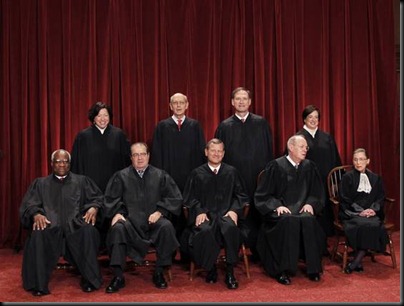
Supreme Court_2013

A representative of the Public Information Office of the Supreme Court informed us via email that “The Court does not comment on security operations as a rule.”[25] And Tracey Johnston-Crum of the Grove Park Inn told us that “The Grove Park Inn would certainly defer to the decision of the Supreme Court.”[26] CONELRAD has notified the Court that their rooms are still reserved and that the swimming pool has been completed.[27]
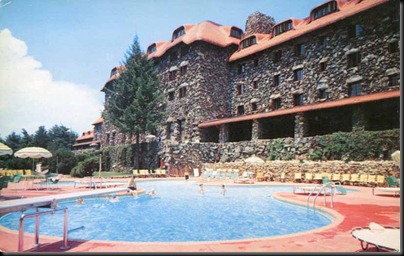
Grove Park Post Card_lo

ACKNOWLEDGEMENTS

First and foremost CONELRAD would like to thank David Mead and Hilary Thomas of the Grove Park Inn for allowing Bill Geerhart to examine the hotel’s archives to find the document that is the primary focus of this article. Mr. Mead and Ms. Thomas took time out of their day during a very busy week to humor what must have seemed like a rather odd request. We are truly grateful for their kind hospitality. We would also like to thank David Krugler who was the first person to write about the existence of the contract between the Grove Park Inn and the U.S. Supreme Court. Without Professor Krugler’s initial research, we would not have had the roadmap to the documents that we ultimately found. Finally, thanks to Bruce E. Johnson for providing confirmation that the contract did, in fact, reside in the Grove Park Inn archives. Mr. Johnson was also very generous with his time in answering our questions regarding the history of the hotel and its staff.


[1] Ted Gup, “The Ultimate Congressional Hideaway,” Washington Post, May 31, 1992. Note: The Post’s D.C. rival, the Washington Times, tried to steal some of the newspaper’s glory by reporting on the Post’s scoop on its front page the day before.

[2] David Krugler, This is Only a Test: How Washington D.C. Prepared for Nuclear War [New York: Palgrave Macmillan, 2006] p.7; p. 168.

[3] Ted Gup, “The Doomsday Blueprints,” Time magazine, p. 35, August 10, 1992. Gup, “How the Federal Emergency Management Agency learned to stop worrying—about civilians—and love the bomb,” Mother Jones, January 1, 1994. “Very Important People,” New York Times, November 1, 1992.

[4] David Mead of the Grove Park Inn to Bill Geerhart during a January 8, 2013 telephone conversation. Bruce E. Johnson’s books about the Grove Park Inn: Built for the Ages: A History of the Grove Park Inn [Asheville, NC: Grove Park Inn, Revised Edition, 2013] and Tales of the Grove Park Inn [Fletcher, NC: Knock Wood Publications, 2013].

[5] Bruce E. Johnson to Bill Geerhart during a January 8, 2013 telephone conversation. For reference to the Grove Park Inn’s contract with the Supreme Court, see page 313 of Johnson’s Tales of the Grove Park Inn.

[6] Bruce E. Johnson to Bill Geerhart during a January 8, 2013 telephone conversation.

[7] The photocopy of the April 3, 1956 contract and other documents related to the hotel’s agreement with the U.S. Supreme Court were found in the Grove Park Inn Archives, Asheville, North Carolina, in a binder labeled “Historic Memorabilia 1955-1969.”

[8] CONELRAD searched the unclassified records of the various federal civil defense agencies at the National Archives in College Park, Maryland and at the John F. Kennedy Presidential Library and Museum in Boston, Massachusetts. We also searched the relevant Supreme Court records at the Library of Congress. No copy of the contract was found at these facilities.

[9] Supreme Court / Grove Park Inn contract, April 3, 1956, binder: “Historic Memorabilia 1955-1969,” Grove Park Inn Archives, Asheville, North Carolina.

[10] For Edward C. Leach, Sr. obituary see The Galveston County Daily News, p. 4-A, June 20, 1996. For Mr. Leach’s comments regarding his father: Bill Geerhart telephone interview with Edward C. Leach, Jr., April 22, 2013.

[11] For October 14, 1955 Willey letter to Warren: Box 399, folder “Clerk: Memos, Orders, et al 1946-1956, Papers of Earl Warren, Library of Congress, Manuscript Division. For more on Harold B. Willey see “Harold B. Willey, Retired Supreme Court Clerk,” Washington Post, p. B6, July 8, 1982.

[12] “News Censorship Mapped for War,” New York Times, November 6, 1954.

[13] For Willey letter to Warren: Box 399, folder “Clerk: Memos, Orders, et al 1946-1956, Papers of Earl Warren, Library of Congress, Manuscript Division.

[14] Ibid.

[15] Ibid. Justice Burton’s note is attached to Willey’s letter.

[16] For June 6, 1956 Willey letter to Warren: Box 399, folder “Clerk: Memos, Orders, et al 1946-1956, Papers of Earl Warren, Library of Congress, Manuscript Division.

[17] For June 12, 1956 Warren letter to Willey: Box 399, folder “Clerk: Memos, Orders, et al 1946-1956, Papers of Earl Warren, Library of Congress, Manuscript Division.

[18] For undated John F. Davis draft letter to Edward A. McDermott: Box 414, folder “Court – Subject File – Marshal Civil Defense,” Papers of Earl Warren, Library of Congress, Manuscript Division. Note: Another document in the same file dated October 26, 1962 states: “The Marshal has done nothing on this matter except to send Photostats of each employee’s retirement card to the Gr Clerk of the District Court at Asheville.” CONELRAD has a pending request with the clerk of the U.S. District Court in Asheville to determine if any of the old records sent by the Marshal of the Supreme Court still exist. If and when we receive a response, we will update this post.

[19] McDermott appointment book entry for October 26, 1962: Collection Number MsC0241, Edward A. McDermott Papers, Special Collections and Archives, University of Iowa. McDermott October 30, 1962 memo to Warren: Box 1, U.S. Office of Emergency Planning, Microfilm, Roll 1, Paper Copies, John F. Kennedy Presidential Library and Museum, Boston, Massachusetts.

[20] Telephone interview with Ramsey Clark conducted by Bill Geerhart on April 2, 2013. Note: Clark did not know that the bunker had a name, but based on his description of the site and the route that he took to drive there, there is little doubt that he visited Mount Weather. Also supporting the assertion that Clark went to Mount Weather is the previously published material that this is the facility the federal government reserved for the Court (see footnote 3). Also, Edward A. McDermott (the official who met with Warren) was director of the Office of Emergency Planning (OEP). This was the agency responsible for operating Mount Weather during the referenced time period. Ramsey also told us that he was unaware of the Grove Park Inn arrangement.

[21] CONELRAD review of federal civil defense records related to annual Operation Alert drills located at the National Archives in College Park, Maryland. CONELRAD also reviewed relevant Supreme Court files at the Library of Congress. CONELRAD also asked author David Krugler if he was aware of any document related to the Supreme Court participating in civil defense relocation exercises. He told us that he was not.

[22] December 13, 1962 memo from Rodney S. Morgan to Edward J. Giusti and February 15, 1963 letter from E.C. Leach to Nora Gunter: binder: “Historic Memorabilia 1955-1969,” Grove Park Inn Archives, Asheville, North Carolina.

[23] Correspondence related to the re-confirmation of the agreement: October 26, 1962 letter from John F. Davis to Robert H. Francis and Joe R. Woods’ November 26, 1962 response to John F. Davis: binder: “Historic Memorabilia 1955-1969,” Grove Park Inn Archives, Asheville, North Carolina. April 29, 1966 memo from John F. Davis to Earl Warren and Warren’s April 29, 1966 response: Box 414, folder “Court – Subject File – Marshal Civil Defense,” Papers of Earl Warren, Library of Congress, Manuscript Division.

[24] CONELRAD searched the unclassified records of the various federal civil defense agencies at the National Archives in College Park, Maryland and at the John F. Kennedy Presidential Library and Museum in Boston, Massachusetts. We also searched the relevant Supreme Court records at the Library of Congress.

[25] Scott Markley, Public Information Office, U.S. Supreme Court to Bill Geerhart via email, April 18, 2013. Note: Markley’s response also offered the location, already in the public domain, of where the Supreme Court heard oral arguments during aftermath of the 2001 anthrax letter attacks (the E. Barrett Prettyman Courthouse of the U.S. Court of Appeals for the D.C. Circuit).

[26] Tracey Johnston-Crum to Bill Geerhart via email, April 17, 2013.

[27] Bill Geerhart to the U.S. Supreme Court Public Information Office via email, April 23, 2013.